 1300 271 824


When the Carer Is the One Who Is Dying
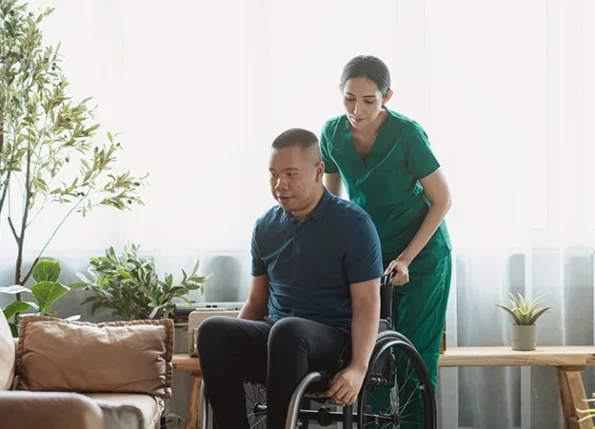
When the carer is the one who is dying: the plan nobody makes
A woman is 82. She has terminal cancer and perhaps four months. Her son is 52, has a moderate intellectual disability, and has lived in her house for every one of those 52 years. She is his mother, his communicator, his advocate, his social world and his routine. Nobody else knows how he indicates pain, what he is frightened of, or why he will not get in a car with the radio on.
Nothing has been planned. She has not been able to face it, and nobody has made her.
What happens next, unless something changes, is the most predictable tragedy in this sector. She dies. He is placed in emergency respite within days, because there is nowhere else. Then into whichever vacancy exists, which may be in another suburb or another city. He loses his mother, his home, his bedroom, his routine, his neighbourhood and every familiar face, in the same fortnight. Six weeks later his new provider records escalating behaviours of concern and requests a behaviour support referral.
He is grieving, in a strange house, surrounded by strangers, and nobody has explained any of it.
This guide is about two things, and the second one is the one almost nobody writes about: supporting a family through the death of a person with disability, and supporting a person with disability through the death of the family member who has been their entire support system.
We support NDIS participants across New South Wales, including people whose parents are ageing or dying. We are not a clinical or counselling service and nothing here is medical or legal advice.
The dying carer
Start here, because this is the situation with the most preventable harm in it.
Across the conditions covered in this library, informal carers do an enormous share of the work — the economic analysis of spinal cord injury in Australia found up to 70 per cent of people had an informal carer, and the pattern holds across intellectual disability, acquired brain injury and progressive neurological conditions. Those carers are frequently parents, and parents age.
So this is not a rare scenario. It is a demographic certainty happening thousands of times a year, and it is overwhelmingly unplanned.
Why it goes unplanned:
The parent cannot face it. This is the main reason and it deserves sympathy rather than exasperation. A parent being asked to plan for their disabled child’s life after their own death is being asked to confront two unbearable things at once. Many simply cannot, and the avoidance is not negligence.
Nobody raises it. Services do not ask. GPs do not ask. Support coordinators do not ask, because it feels intrusive. So the subject sits there for thirty years.
The mutual dependency is invisible. This is the part outsiders consistently miss. By the time a parent is 80, the relationship is frequently reciprocal — the adult child helps with the shopping, remembers the tablets, carries things, provides company, and is the reason the parent gets up. Suggesting separate living arrangements can read as a proposal to dismantle the only functioning household either of them has, which is sometimes exactly what it would be.
The parent does not trust the alternative, often with good reason. A parent who has spent four decades correcting services’ mistakes is not reassured by the promise that a provider will manage.
And there is no trigger. Nothing in the NDIS planning process forces the question, and a plan can be reviewed for twenty years without anybody asking what happens when the 79-year-old in the next room dies.
What should happen instead
The answer is not a better crisis response. It is a transition that starts years early and happens gradually while the parent is still alive.
Raise it, gently, early, and more than once. The question is not “what happens when you die.” It is “what would you want for him, and how could we start building that while you are still here to supervise it?” That framing gives the parent control over something, which is what they have been defending all along.
Establish who will decide. Does the person have capacity for which decisions? Is there an enduring guardian, or should one be appointed while the parent can do it? Who will be the person responsible once the parent has died — and is there anybody at all? A person whose only relative was their mother may have no person responsible once she dies, which can require an application to NSW Civil and Administrative Tribunal’s Guardianship Division. Finding that out during the week of the funeral is appalling and avoidable. The advance care planning guide in this library covers the hierarchy.
Get it written down — all of it. Everything the parent knows and nobody else does. How he communicates. How he shows pain. What frightens him. What he eats. His history. His routines. Why the radio matters. What happened in 1997 that he has never got over. This document is the single most valuable thing a dying carer can produce, and a provider or coordinator sitting down with them over several visits to write it is doing the most useful work available.
Build the alternative gradually, while she is alive. Short stays somewhere else, while she is still there to be returned to. Workers who come to the house and become familiar. A provider she has met and formed a view about. Time spent in a potential future home. Somebody who has stayed somewhere else before is in a completely different position from somebody for whom the first night away from home is the night after his mother died.
Consider whether the move should happen before the death. This is the hardest suggestion and sometimes the right one. A planned move while the parent is alive, with her involved, able to visit, able to reassure him, and able to correct what the new service gets wrong, is vastly better than the same move executed in a crisis. Some families will take that option if it is offered properly. Almost nobody is offered it.
Tell him what is happening. He will know something is wrong. The grief guide in this library sets out why exclusion makes things worse and how to have the conversation.
Fund it. A plan review ahead of the transition, with the situation stated plainly: the primary carer has a terminal illness, informal supports are about to cease entirely, and funded supports need to be in place before that happens rather than after. That is a strong case and it is rarely made in time.
And know what the trigger will be. If the plan is that he stays in the house with supports, who is going to be there the night she dies? If the plan is a move, what initiates it? Write it down.
The ageing carer, short of dying
The same problem, slower. A mother of 74 who is still doing hoist transfers. A father of 80 managing a bowel programme. A sibling in their sixties who took over from a parent and is now developing their own health problems.
This is the most common unmanaged risk in supported living, and it resolves one of two ways: planned, or by ambulance.
The practical signals that it is time to act: the carer’s own health deteriorating, a carer injury, missed appointments and medications, the carer declining respite because they cannot face arranging it, the house becoming unsafe, or the carer saying — often lightly, often once — that they do not know how much longer they can do it.
When somebody says that, hear it. It is usually said after a long time thinking about it and it is frequently not repeated.
And raise it at every plan review, as a standing item: who is providing informal support, how old are they, how is their own health, and what is the plan. Addressed early it is a transition. Addressed late it is a crisis with a bed in whatever vacancy exists.
Anticipatory grief
Grieving somebody before they die is real, it is normal, and people feel guilty about it.
It presents as sadness, exhaustion, irritability, difficulty being present, withdrawal, a sense of unreality, and sometimes a desperate wish for it to be over — which carers find shameful and which is one of the most common experiences in long caregiving.
That wish is not a wish for the person to die. It is a wish for the ordeal to end, and it coexists perfectly well with love. Carers who hear that said out loud by somebody else are frequently visibly relieved.
Anticipatory grief does not reduce grief afterwards, which people sometimes expect. It is additional, not a down payment.
For parents of children with progressive conditions this can run for a decade or more — grieving each lost skill as it goes, which is a specific and exhausting form of it that the muscular dystrophy, MND and Huntington’s libraries on this site each touch on.
Carer exhaustion, and the health that goes unaddressed
Long-term carers have worse health outcomes than non-carers, and the mechanisms are not mysterious: years of disrupted sleep, physical injury from transfers and lifting, their own appointments cancelled, their own screening missed, financial strain, and social isolation.
The specific pattern worth naming: the carer’s health problems get deferred because there is nobody to cover. A mother does not have her knee replaced because there is nobody else to do the transfers. A father does not pursue his own chest symptoms because an investigation would mean a day in hospital. Then the deferred problem becomes the crisis that ends the caring arrangement anyway, at a worse moment and with less control.
What to actually do:
- Carer Gateway on 1800 422 737 — the national entry point for carer support, including counselling, coaching, peer support, respite and emergency respite
- Carer Payment and Carer Allowance through Services Australia, and a check that they are actually receiving what they are entitled to, because many are not
- Respite that is used, not just funded. A respite allocation that goes unused every year is a signal, not a success.
- The carer’s own GP, with the caring role on the record, and a health assessment of their own
- Funded supports that genuinely substitute, rather than supplementing what the carer does. A plan that funds three hours while the carer does the other twenty-one is not respite.
- And the honest conversation about what the carer is physically still able to do, before an injury makes it for them
Supporting a family through a death
Switching direction — the family of a person with disability who is dying.
What helps:
Honesty, early and repeatedly. Families consistently say afterwards that they wished somebody had told them sooner how things actually stood. Nobody says they wished they had been told later.
Continuity. The same workers, the same coordinator, the same faces. A family meeting new people during their relative’s final weeks is being asked to manage the service’s staffing problem on top of everything else.
Practical help. Tea. Chairs. A blanket. Somewhere to sleep. Parking. Food appearing. Someone noticing they have not eaten. This is remembered for decades and costs almost nothing.
Being given something to do. Mouth care. Hand massage. Reading aloud. Choosing the music. Families feel useless and a task is a kindness.
Not being managed. Families can tell when they are being handled rather than informed, and it destroys trust at the worst possible time.
Information about what to expect, before it happens. The breathing. The secretions. The mottling. The brief rally. The fact that there may be no clear moment of death. Families who have been told these things cope; families who have not interpret each one as a crisis.
Permission for whatever they feel. Relief. Anger. Nothing. Wanting to be there constantly, or not being able to be in the room.
What does not help: platitudes, being told the person is in a better place, having their grief compared to anybody else’s, being asked to make decisions at 3am that could have been made in March, and being asked about the room and the belongings in the first week.
The hard families
Those who disagree with each other. Common and exhausting for everybody. A palliative care social worker is frequently better at resolving it than anybody else, and asking for one early is sensible. Where it concerns who has authority to decide, the advance care planning guide covers the person responsible hierarchy, and NSW Civil and Administrative Tribunal is the forum for a formal determination.
Those who want everything done. Including treatment the team considers futile. This usually comes from somewhere specific — guilt, a promise made years ago, religious conviction, a previous experience of a service giving up on their relative, or a reasonable belief that disabled lives get written off too easily. That last concern is legitimate and the Disability Royal Commission documented why. The response is not to argue but to find out what the fear is, and to have the clinical team address it directly.
Those who are absent. Judged quickly and often unfairly. Some families were pushed out decades ago by institutions. Some carry trauma. Some cannot bear it. A provider’s job is to keep the door open and to avoid making the person’s remaining family feel worse than they already do.
And people with no family at all, which is a real and significant group in this sector. Then the workers are the people who know them, the provider should be honest about what it cannot provide, and the question of who makes decisions needs resolving early rather than in a crisis.
After the death
The part everybody underestimates.
The identity loss. A person who has been a carer for thirty or forty years loses a role, an occupation, a daily structure, a purpose and a social world at the same moment as losing the person. The question “who am I now” is not abstract.
The income. This is brutally practical and rarely mentioned. Carer Payment and Carer Allowance stop when the person dies. There are bereavement provisions and the detail should be checked with Services Australia, but the underlying fact remains: somebody who has been out of the workforce for three decades, who may be in their sixties, loses their income weeks after losing their child. They need financial advice and they need it early.
The house full of equipment, the medications, the hoist, the modified bathroom. Physically and emotionally difficult, and there is no hurry.
The loss of the community. The therapists, the workers, the other parents, the clinic staff. These were friends, and the relationship ends with the funding.
The grief that lasts years. Parental bereavement in particular is long, and the expectation of recovery within a year is wrong and makes people feel defective for still grieving.
What helps: bereavement counselling, which palliative care services frequently provide and which should be asked about; GriefLine on 1300 845 745; Lifeline on 13 11 14; bereaved parent peer groups, which people consistently find more useful than individual counselling; financial counselling; and somebody from the service maintaining contact, because the abruptness with which services disappear is one of the most commonly reported injuries.
That last point is a direct recommendation to providers. A phone call at six weeks and again at the anniversary, from somebody who knew the person, costs nothing and is remembered permanently.
Siblings of adults with disability
A brief note on a group that gets nothing.
An adult sibling frequently inherits the caring role, or the guilt of not inheriting it. They have usually spent their childhood with less parental attention, and they arrive at middle age facing a decision nobody has ever discussed with them: whether to take over when their parents cannot.
They should be in the planning conversation years before they need to be, and they should be told explicitly that taking it on is a choice rather than an obligation — because many believe it is not one, and a caring role entered out of guilt serves nobody.
Siblings Australia provides support specifically for siblings of people with disability, and most people in this position have never heard of it.
When the Carer Is the One Who Is Dying: common questions
Unless it has been planned, usually the worst available sequence: emergency respite within days, then whichever vacancy exists, possibly far away — so the person loses their parent, their home, their routine and every familiar face in the same fortnight, and their grief is then recorded as behaviours of concern. It is the most predictable preventable harm in this sector and it is overwhelmingly unplanned.
Because the parent frequently cannot face it, which deserves sympathy rather than criticism. Because nobody raises it — not services, not GPs, not coordinators. Because by the time a parent is 80 the dependency is often mutual, so separate arrangements can read as dismantling the only functioning household either has. Because the parent may not trust the alternative, often with reason. And because nothing in the NDIS process forces the question.
Not as “what happens when you die” but as “what would you want for him, and how could we start building that while you are still here to supervise it?” That framing gives the parent control over something, which is what they have been defending for forty years. Raise it gently, early, and more than once.
Write down everything they know that nobody else does — how the person communicates, how they show pain, what frightens them, what they eat, their history, their routines, and why the small things matter. A provider or coordinator sitting with them over several visits to produce that document is doing the most useful work available.
It is the hardest suggestion and frequently the right one. A planned move while the parent is alive, involved, able to visit and able to correct what the new service gets wrong, is vastly better than the same move in a crisis. Short stays elsewhere while there is still somewhere to come back to also help enormously — somebody who has stayed away before is in a completely different position from somebody whose first night away is the night after their mother died.
It happens, and it needs identifying in advance. Where somebody has no enduring guardian, no spouse, no unpaid carer and no close relative, decisions may require an application to NSW Civil and Administrative Tribunal’s Guardianship Division. Discovering that during the week of the funeral is appalling and avoidable — appointing an enduring guardian while the parent can still do it is the better route.
The same problem, slower, and the most common unmanaged risk in supported living. The signals are the carer’s own health deteriorating, a carer injury, their own appointments and medications being missed, respite funded but never used, and the carer saying once, lightly, that they do not know how much longer they can do it. That sentence is usually said after long consideration and frequently not repeated — hear it the first time.
Yes, and it is normal to feel guilty about it. Anticipatory grief presents as sadness, exhaustion, irritability, withdrawal and sometimes a wish for it to be over — which carers find shameful and which is one of the most common experiences in long caregiving. That wish is for the ordeal to end, not for the person to die, and it coexists with love. It also does not reduce the grief afterwards; it is additional rather than a down payment.
Carer Gateway on 1800 422 737 is the national entry point, covering counselling, coaching, peer support, respite and emergency respite. Carer Payment and Carer Allowance through Services Australia, and it is worth checking entitlements are actually being received because many are not. The carer’s own GP, with the caring role on the record. And respite that is genuinely used rather than simply funded — an unused allocation is a signal, not a success.
Carer Payment and Carer Allowance cease on the death of the person cared for, and there are bereavement provisions whose detail should be confirmed with Services Australia. The underlying reality is that somebody out of the workforce for decades, possibly in their sixties, loses their income weeks after losing their child. It is one of the least discussed consequences and it needs financial advice early.
Honesty early and repeated. Continuity of staff. Practical help — tea, a chair, somewhere to sleep, food appearing, somebody noticing they have not eaten. Being given something to do, like mouth care or reading aloud. Being informed rather than managed. And being told what to expect before it happens: the breathing, the secretions, the mottling, the brief rally, and that there may be no clear moment of death.
Maintain contact. A phone call at six weeks and again at the anniversary, from somebody who actually knew the person, costs nothing and is remembered permanently. The abruptness with which services disappear once funding stops is one of the most frequently reported injuries from families, and it is entirely within a provider’s control.
They get almost nothing, frequently inherit the caring role or the guilt of not inheriting it, and typically spent childhood with less parental attention. They should be in the planning conversation years before they need to be, and should be told explicitly that taking it on is a choice rather than an obligation — because many believe it is not, and a caring role entered from guilt serves nobody. Siblings Australia provides support specifically for this group and most people in it have never heard of it.




