1300 271 824

What Is Supported Independent Living? A Plain-English Guide for Families
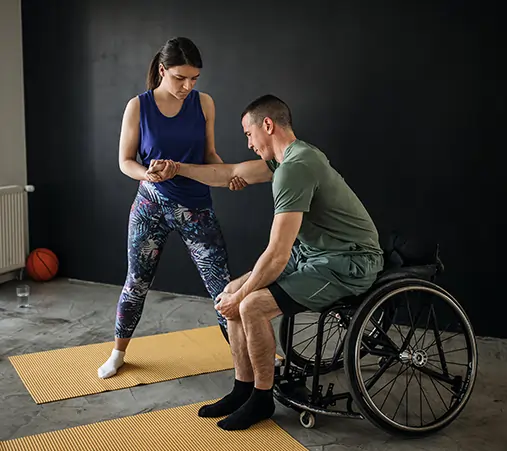
If you frequent therapy circles or walk in the halls of a premise where the National Disability Insurance Scheme has roots, you must have heard the words, ‘Supported Independent Living’, or its abbreviation, ‘SIL’.
A support coordinator may have suggested it during discussions about your loved one’s NDIS plan. Another family might have told you about their experience with it. One way or another, this is a term that people needing personal care or support services for their daily tasks have heard.
We have curated this guide that answers all the questions you have on Supported Independent Living. It is to help siblings, parents or primary caregivers understand it, because this type of support changes routines drastically.
What is Supported Independent Living?
SIL is only one of the NDIS Housing and Living Options available to eligible participants. The widely-known home modifications support and assistance with daily living are other options. Specialist Disability Accommodations, Individualised Living Options and Medium Term Accommodation are other home and living supports that the NDIS funds, too.
For definition purposes, SIL is an NDIS-funded type of support that provides professional ongoing supervision at home for people whose support needs are above what the typical support services cover. Support workers assist with this support to help the participant build their social skills.
It differs from other housing and living options in the fact that it focuses solely on paying for 24/7 support for disability. The others focus on paying for and making the environment where these supports are provided and received conducive.
Good SIL goes beyond having a stacked roster of care but about making sure that all supports provided can help your loved one become confident. SIL support workers bring a level of professionalism to personal care, daily tasks, safety and medication which family members cannot provide for their loved ones. Alongside these services, they encourage the person to do more for themselves.
What does Supported Independent Living Actually Provide?
In Supported Independent Living, there is no one-size-fits-all method. Each individual has routines tailored to their needs.
Some people may need full-on personal care, while some may need medication management and managing their medical appointments. Some may just require assistance to get things done around the house.
Some may just need help with becoming more confident in doing things. In this case, the support worker will help them work on their social skills, communication skills, amongst others. Some may need mobility support using mobility aids, and some others may need all these supports put together.
The NDIS recommends it for people who need personalised support or active disability support for more than the daily regular eight working hours. This typically covers people who:
- Have an intellectual disability.
- Are autistic.
- Have physical disabilities that affect mobility or personal care.
- Have complex disability-related support needs.
- Need assistance developing independent living skills.
- Need regular supervision or support because of their disability.
- Are transitioning from the family home into adult living.
- Can no longer rely on ageing parents or other family members for all their daily support.
The person’s functional capacity, goals, circumstances and level of disability-related support required will be taken into consideration before Supported Independent Living is recommended. An SIL recipient can still:
- Choose what they eat.
- Decide how they spend their free time.
- Choose their clothes.
- Maintain relationships with family and friends.
- Make decisions about their room and personal belongings.
- Learn household skills.
- Participate in work, education or community activities.
- Develop relationships and pursue personal goals.
Whatever the case may be, SIL will be tailored accordingly, with the only exception being medical care. That is strictly in the domain of medical personnel or allied health professionals. This particular distinction is important for families who support a loved one with complex medical needs.
SIL and Shared Living
SIL has a small limitation.
NDIS rarely considers participants who still live with their families for Supported Independent Living funding. They consider those who live alone or who are already in facilities first.
If your loved one still lives with your family, NDIS will only give SIL funding if their assessment deems them fit. If not, they will get the ‘regular’ in-home support packages.
This is one of the reasons many families are sceptical about this support category. Many would prefer that their loved one stay at home and receive all the support they need, than to move away to a facility or a shared accommodation.
Shared accommodation has its benefits, however. It provides companionship, opportunities to practice social skills and community access. It is also a practical way to share support resources. Also, in a shared accommodation, your loved one can still have their own personal support staff for SIL support.
The paragraphs above could lead you to conclude that your loved one needs a home to get the best support. This is far from being the case.
Shared living might not suit your loved one for many reasons, and especially if they have behaviour support plans paid for. Other things that could rule out shared living for your loved ones are:
- Their sleep patterns
- Personality
- Communication style
- Sensory needs
- Safety considerations
- Their personal preferences.
Despite all of these, shared accommodation for your loved one might be the best option. If this is the case, look beyond the size of the building itself. Look at the living arrangement instead and determine if your loved one can thrive in it.
Go for one with individual units to help foster your loved one’s independence. This is important because they will be more open to community participation if they are assured of their privacy.
Also note that, in some cases, your family will have to cover ordinary living costs. SIL funding only covers the fees for their support staff’s tasks.
Can SIL Residents in Shared Accommodation Receive Commonwealth Rent Assistance?
Some NDIS participants receive income support payments. These ones may qualify for Commonwealth Rent Assistance if they use those payments to sort out accommodation costs in a shared space. They can also qualify if they use their payments for certain types of costs, like Disability Support Pension.
If housing costs for shared living are a concern, families should check the participant’s individual circumstances with Services Australia checks and see if the rent will suffice.
What if SIL is not the Right Option?
As stated earlier, there are other home and living supports and support models that the NDIS pays for. If your loved one needs targeted help for a few hours, opt for assistance with daily living. If they want a specific type of assistance, there is the Individualised Living Options category. If their disability greatly affects their ability to function, there is the Specialist Disability Accommodation category.
All of these are available for your loved one, even if they want to move out of the family home into their own private rental. Never force anybody into accepting SIL, because it can feel invasive. Workers will be around 24/7, creating privacy concerns for your family or loved one.
Availability of Supported Independent Living Across Australia
As a national scheme, the basic principles of Supported Independent Living are the prerogative of the NDIS. However, participants’ ability to access SIL services depends on their location.
It is different for someone living in South Australia as it is for someone living in Queensland. It is also different for participants in New South Wales or Western Australia. The same is true across Victoria, the ACT, Tasmania and the Northern Territory.
Location is not the only factor at play here. Housing availability, transportation and rental conditions also affect SIL service access. In essence, it is not about if you can get SIL in your state, but about how living conditions there can help make the most of it.
Supported Independent Living and the NDIS Plan
SIL is just one of different support categories that a person can have in their NDIS plan. The reason you are looking it up is because it is gaining so much traction among families who have opted for SIL support for their loved ones.
The NDIS’s current data shows just how significant Supported Independent Living has become. In the 12 months leading up to March 2026, the scheme made about $12.2 billion in SIL payments. To put this into context, the budget for core daily activities is $26 billion.
Each participant received different amounts depending on their needs as assessed by the NDIS. This shows how SIL funding is quickly becoming a key category in many plans.
What is an SIL Package?
People sometimes use the phrase SIL package to colloquially describe everything related to in-home care support and funding. This framing can throw people off, because what a person receives in SIL funding and support depends on the following factors:
- How much personal assistance the person requires.
- Whether they need active support during the day.
- Whether they need overnight support or supervision.
- Whether support workers can safely support several residents together (in cases where the person lives in a facility home).
- Whether the participant needs individual support.
- The person’s goals and capacity-building needs.
- The way the person’s roster of care is structured.
Take a look at your loved one’s core budget before engaging an SIL provider. Find out if you have cover for community participation and assistive technology. Confirm with your plan managers if you have cover for an occupational therapist and living costs, too.
This is because SIL funds are strictly for paying the support workers who help your loved one become independent. The NDIS created the Supported Independent Living support category funding to support those who need constant, deliberate and intentional support and cannot pay for it from their regular plans or out of pocket.
Common Misunderstandings About Supported Independent Living
1. SIL means the person has to live in a group home.
No, it does not mean the person has to live in a group home. Supported Independent Living can involve shared living, but the NDIS can add it to a participant’s plan if their needs justify it. It all depends on the assessment carried out of the person’s circumstances at the time of applying for this funding.
2. SIL pays the person’s rent.
Absolutely not! SIL only pays the support staff for their work. As part of their services, they help with social and recreational activities. They also support skill building, personal care, and medication management.
Your loved one’s rent, their groceries, and their personal effects are not covered.
3. SIL and SDA are the same thing.
They are not the same thing. SIL pays for support from support workers, and covers the kinds of support that they provide. SDA helps a participant pay for accommodation in a home suited to their disability while providing them with a place to thrive.
The support workers at that home still need to be paid for. This is what led to the creation of this category. It exists to support people who cannot pay out of pocket for their support.
4. The participant loses independence when they receive SIL.
This fear is valid. SIL brings with it a lot of change: there will be more support workers around and more people in your loved one’s personal space. However, the intention is the opposite.
Supported Independent Living indeed helps them become independent, but under supervision. The idea is to have someone around who will step in when things get rough. This means your loved one can decide on the amount of active support they want.
It also means that peculiarities such as overnight arrangements will depend on your loved one.
5. A SIL provider decides who the person lives with.
The core of this support is the participant’s independence and growth into one of Australia’s future leaders. They have the final say with respect to the support they receive and, if they are living in a shared accommodation, who they room with. To an extent, a participant can request for a particular support worker from an SIL provider who they might have bonded with.
6. SIL replaces all other support services.
No, it does not. A participant may still require the services of an occupational therapist, allied health professionals, behavioural support therapist, and other independent living support services like assistance with daily living supports amongst other NDIS and mainstream services. What SIL simply does is to pay for the overnight services, the weekends and the time beyond the regular eight working hours that support workers would typically serve a participant.
7. The most expensive option must provide the most support.
This is rarely ever true. Once NDIS deems a participant worthy of SIL support and funding, they will budget the right amount that will support the participant’s actual needs, goals and circumstances.
A Note About Recent NDIS Changes
The NDIS recently changed some details about Supported Independent Living provider registration and claiming of funding category, so families researching need to double-check the information they gather.
SIL providers are now mandated to follow a different set of registration rules from 1st July 2026, which means that any provider operating under the previous registration rules is no longer considered NDIS-registered. This will not change anything on the participant’s side, however. This means that if you want to continue using NDIS-registered providers, you should be familiar with the new registration rules.
Participants will also be required to learn about the new rules to claim their SIL funds from NDIS, which were also updated on 1st July 2026. Nothing will change with respect to how much the participant gets and what the funds pay for, but claiming it now follows a different process.
The Bigger Picture
A great way to fully grasp this concept is to ignore the word “Independent” in the term.
By definition, independent means self-sustaining, or being able to achieve things by oneself. SIL, however, does not allow this in totality.
What it does is to set your loved one on the path to being able to do these things, while providing an environment where they can slowly build up the confidence to do them. Someone with an intellectual disability cannot be left fully alone, unfortunately, but they can be supported to do the things they want to do. This support can mean saying no sometimes, or redirecting their focus elsewhere temporarily.
For those without intellectual disabilities, they can choose the kind of help they receive and decide on their own routines. They can have a say in the living arrangements if they have to live in a shared space. None of these makes them less independent; it only ensures that they can eventually be fully independent.
A conversation around this must be had with the providers and your loved one so that you can be sure of what you are committing to.
Where Should Families Start?
If you are wondering where to start, start with documenting your loved one’s daily life.
Find out what they like doing and what kinds of daily tasks they can manage. Take into cognisance their use of mobility aids, and their ideal living arrangements. Then speak with their NDIS contact, support coordinator, occupational therapist or other relevant professionals about their home and living supports.
Take your time to compare options, and visit potential homes and their preferred private rental where applicable. Find out if their chosen space is social and affordable housing, as SIL does not cover housing costs. If you settle for a shared space, ask about everything from the roster of care to other costs.
Once you have all these figured out, you can look into making a SIL funding request.
Whatever you do, do not do it without input from the person whose life is about to experience a big change thanks to Supported Independent Living. In the end, it is about finding the right level of independent living support services to help them live the life that fits them.