 1300 271 824


Ageing With a Spinal Cord Injury: What Changes After 20 Years
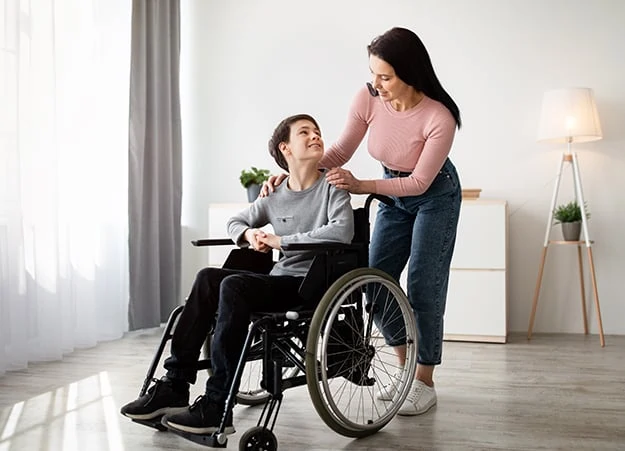
Ageing with a spinal cord injury: the first generation to do it is doing it now
Before the Second World War, most people with a spinal cord injury died within a few years, usually of kidney failure or infection. The idea of ageing with a spinal cord injury did not exist as a clinical subject because almost nobody did it.
Then antibiotics arrived, spinal units were established, bladder management was transformed, and emergency retrieval improved. The 70-year British study published in Spinal Cord in 2017, following 5,483 people injured between 1943 and 2010, documents the result: urogenital deaths fell from 32.8 per cent of all deaths in 1944 to 1969 down to 8.7 per cent by 2005 to 2014, and the overall pattern of death shifted to resemble that of the general population.
People now live for decades after a spinal cord injury. Research summarised by the SCIRE Project reports ten-year survival around 87 per cent and twenty-year survival around 78 per cent in one cohort, and in one study of veterans who survived the first three months, a mean additional life expectancy of 39 years — about 85 per cent of age-matched men in the general population.
Which produces a situation nobody designed for. A man injured at 22 in 1985 is now in his sixties, has been pushing a wheelchair for forty years, and has questions that his spinal unit has limited experience answering — because the cohort asking them is only just arriving.
The system was built around the acute injury and the rehabilitation admission. The fifty years afterwards were an afterthought, and they are where almost all of the lived experience sits.
We support people with spinal cord injury across New South Wales, including people who have had their injury for decades. We are not a medical service and nothing here is medical advice. This guide sets out what the evidence says changes with time, because the single most common failure in long-term spinal cord injury care is that nobody is looking.
The mortality picture, honestly
Overall mortality remains elevated. One substantial study reported overall mortality 3.6 times higher than the general population in its region, with a crude annual mortality rate of 33 per 1,000 person-years. The AlphaBeta report prepared for SpinalCure Australia found annual mortality risk up to seven times the general population for people with severe injuries graded AIS A or B, and a weighted average remaining life of 19.9 years across the whole population — a figure that ranges from 4 to 51 years depending on age and severity.
Injury level matters. One study found a 1.6 times higher likelihood of death for C1 to C4 injuries compared with other levels. Another found age at injury to be a stronger predictor of survival than complete tetraplegia — which is to say that being injured older matters more than being injured worse.
What people die of now, from the 70-year British study, for the 2005 to 2014 period:
| Cause | Share of deaths |
|---|---|
| Respiratory | 34.1% |
| Circulatory (cardiovascular and cerebrovascular) | 21.8% |
| Urogenital | 8.7% |
Across the whole study period, neoplasms accounted for 13.9 per cent, and the literature describes cancer as a growing cause of death as people live longer.
And the relative risks, comparing this population with the general population of England and Wales in 2014:
| Cause | Approximate ratio to general population |
|---|---|
| Skin | ~30× |
| Urogenital | ~12× |
| Respiratory | ~5× |
| Suicide | 2.7× |
| Circulatory | 2× |
| All other causes | 1.9× |
| Cancer | ~14% higher |
Those two tables together tell you where to put the effort. Circulatory disease kills the second largest number of people — so it matters in absolute terms. Skin kills the most disproportionately — so it is the clearest preventable excess. And the respiratory figure sits at the top of both lists, which is why it has its own guide here.
What changes with time, system by system
Shoulders, which is the one people feel first
Forty years of propulsion, transfers and push-up pressure relief through a joint built for reaching rather than load-bearing. Imaging studies of long-term manual wheelchair users consistently find rotator cuff and other shoulder pathology at high rates, including in people reporting no pain.
What shoulder failure costs is not comfort but independence — transfers, propulsion, driving, dressing, getting out of bed in the morning. Somebody with a mid-thoracic injury and sound shoulders runs their own life. At 60, with both cuffs gone, the same person may be hoisted by two workers.
This is the strongest argument in the whole field for equipment spending in early and middle years rather than late: power assist, powered tilt so pressure relief is not done by the shoulders, a hoist for the heaviest transfers, and an environment with nothing stored above shoulder height. The equipment and shoulders guide in this library covers it in detail.
Cardiometabolic disease, which is the silent one
This is where the largest preventable burden sits in middle age and it gets the least attention.
After a spinal cord injury, muscle mass below the lesion declines substantially, resting metabolic rate falls, physical activity is harder to achieve, and body composition shifts toward fat. Loss of sympathetic control affects blood pressure regulation and, in higher injuries, limits the heart rate response to exercise. The result is elevated rates of insulin resistance, type 2 diabetes, adverse lipid profiles and cardiovascular disease — appearing earlier than in the general population.
Two practical points that matter more than any general advice:
Standard body mass index underestimates obesity after spinal cord injury. Because muscle mass is reduced, a person can have a BMI in the normal range and substantial adiposity. Lower thresholds are generally considered appropriate in this population, and a BMI read against general population cut-offs provides false reassurance. Waist circumference and clinical assessment are more useful.
The usual screening still applies and is frequently not done. Blood pressure, lipids, glucose or HbA1c, at the intervals a GP would use for anybody with elevated cardiovascular risk — which this person is. “He’s in a wheelchair, we don’t do cardiovascular checks” is a version of diagnostic overshadowing and it kills people.
What helps: funded exercise, which means exercise physiology in the plan and accessible equipment — handcycling, functional electrical stimulation cycling, adapted gym access, arm ergometry; dietetic input, because managing weight on a reduced metabolic rate is genuinely harder; and smoking cessation, which matters disproportionately in a population with respiratory vulnerability.
Skin, where the risk goes up rather than down
The counterintuitive finding, from the evidence reviewed by the SCIRE Project, is that vulnerability grows rather than shrinks: risk is fairly level across the first decade and then rises from around the fifteen-year mark, which is also when the deepest injuries start appearing more often. Hospital readmissions for pressure injuries, meanwhile, have been found to cluster around the fifth year after somebody leaves initial rehabilitation.
The likely mechanisms are cumulative: continuing muscle atrophy thinning the padding over the ischia and sacrum, skin that is less resilient with age, equipment that has drifted out of specification, and vigilance that relaxes as the intensive education phase recedes.
So the person at year twenty is at higher risk than the person at year five, with less surveillance around them. Combine that with skin-related mortality running around thirty times the general population rate and the conclusion is unavoidable: cushion and seating review should continue indefinitely, and skin checks should never stop.
Bladder and kidneys, where the surveillance gets dropped
Covered in detail in the bladder guide here, but it belongs in any discussion of ageing because this is where the lapse is most common.
Renal surveillance works, which is why urogenital deaths fell by three quarters. It remains necessary, because urogenital mortality is still around twelve times the general population rate. And it is the easiest thing to let slide twenty years in, when the spinal unit is far away, nothing hurts, and the appointment is for a problem the person does not have.
Two additional late considerations: bladder stones accumulate with long-term catheter use, and long-term indwelling catheterisation is associated with increased bladder cancer risk, which is why cystoscopic surveillance exists for this group and why visible blood in the urine always needs investigating rather than being written off as catheter trauma.
Bone, and the fracture nobody noticed
Bone density below the level of injury falls substantially in the first years after injury and remains low. The consequence is that fractures occur with minimal trauma — a transfer, a knock against a doorframe, a leg caught while being moved.
And because sensation is absent, they are frequently not noticed. A fracture may present as swelling, as a change in limb position, as increased spasticity, or as autonomic dysreflexia — and nothing else.
Practical implications: any unexplained swelling, deformity, new spasticity or new dysreflexia warrants considering a fracture; transfers and passive movement need care; and bone health is worth discussing with the treating team, though the evidence for what to do about established low bone density below the lesion is less settled than people would like.
Late neurological change, which should never be accepted as normal
A spinal cord injury is supposed to be stable. Progressive deterioration is not expected, and when it happens it needs investigating rather than absorbing.
The specific thing to look for is post-traumatic syringomyelia — a fluid-filled cavity developing in the cord, sometimes decades after injury, which can expand and cause progressive loss of function and which is treatable surgically if identified. Warning signs: new or ascending pain, new weakness especially in the arms, sensation loss rising above the previous level, markedly increased spasticity, new sweating changes, or loss of function the person previously had. Recurrent autonomic dysreflexia is also noted in clinical guidance as a possible indicator.
Other late neurological considerations include cervical degenerative change and nerve entrapments — carpal tunnel and ulnar neuropathy are common in long-term wheelchair users, from years of weight-bearing through the wrists and elbows.
The rule: if a stable spinal cord injury starts changing, get imaging and a specialist opinion. Do not accept “it’s just getting worse with age”.
Fatigue and the functional cliff
Many people describe a change somewhere in their forties or fifties that is hard to attribute to any single system: everything takes longer, energy runs out earlier, and the margin that used to absorb a bad night or a busy week has gone.
Some of that is ordinary ageing happening to a body already working at a higher baseline cost. Some of it is specific and treatable — undiagnosed sleep-disordered breathing, which is common after cervical injury and frequently missed; anaemia; thyroid dysfunction; depression; pain disturbing sleep; cardiometabolic disease; medication effects.
Fatigue that is new or worsening should be investigated, not accepted. The treatable causes are numerous enough that assuming it is just ageing is a mistake.
What it frequently produces is a functional cliff: the person who transferred independently at 45 and cannot at 58. This transition is often handled badly, because it arrives gradually and then suddenly, and because people resist equipment that would have preserved capacity if introduced earlier. The honest framing is that accepting a hoist, a power chair or more support hours at the point it becomes useful is what maintains the rest of a person’s independence — not a step toward losing it.
The things that are not medical
The ageing carer
This is the issue that most often precipitates a crisis and it is almost never planned for.
A substantial share of people with spinal cord injury rely on family support — the AlphaBeta report found up to 70 per cent have an informal carer, with an informal care opportunity cost of $5.6 billion. Those carers are frequently a spouse or a parent, and they age too.
A mother who has transferred her son since he was 19 is 72 when he is 48, and she cannot do it any more. A spouse who has provided intimate care for twenty years has their own arthritis, their own cardiac history, their own exhaustion.
What happens next, if nobody planned, is a crisis — an injury to the carer, a hospital admission, an emergency placement. What should happen is a planned transition: funded workers introduced gradually while the carer is still able, so the person is not learning to accept paid support in the middle of an emergency.
If a family carer is over 60 and still providing physical care, that is the conversation to have at the next plan reassessment. It is a legitimate and well-understood basis for increasing funded support, and it is far better addressed early.
Social contraction
Friendship networks thin with age for everybody. They thin faster where getting out requires a vehicle, a transfer, accessible premises, a working lift and energy. Add the loss of work for many people, and isolation becomes a genuine health risk rather than a sadness.
The 70-year study’s finding of suicide at 2.7 times the general population rate sits in this territory alongside pain and depression. Community participation funding, peer connection and meaningful activity are health interventions, and they are the first things cut when plans are trimmed.
If you or somebody you support is struggling, Lifeline is on 13 11 14, available 24 hours, and Beyond Blue on 1300 22 4636.
Housing that was right at 30
A house modified for a 30-year-old who transferred independently may not suit a 60-year-old who needs hoisting. Group homes populated by younger people twenty years ago now contain residents in their fifties with changing needs and, sometimes, housemates whose needs have diverged entirely.
Re-reviewing housing in middle age is sensible and rarely done.
The NDIS question everybody asks
If you were an NDIS participant before turning 65, you can stay. Reaching that birthday does not push anybody out of the scheme. Somebody who entered before 65 keeps receiving NDIS supports afterwards, with a choice available about whether to shift across to the aged care system instead.
What you cannot do is join after 65. The age test applies at the date of application, and there is no discretion.
This distinction matters enormously and people get it wrong in both directions. Long-term participants worry needlessly that they will be pushed into aged care at 65. People newly injured at 66 are sometimes told to apply when they cannot.
The practical consequences:
If you are a participant approaching 65: you do not need to do anything, and you should be cautious about any suggestion that moving to aged care is required. Compare what is actually on offer before agreeing to anything — Support at Home, which replaced Home Care Packages on 1 November 2025, is capped at roughly $108,000 a year at the highest classification and is means tested, against an NDIS plan built on assessed need.
If you are approaching 65 and not yet a participant — which happens with non-traumatic injury, with late-diagnosed deterioration, and with people who managed without the scheme — apply now. The register’s age-specific incidence data shows the highest rates at 55 to 64 and the second highest at 65 to 74, with low falls a growing mechanism in older people. A great many Australians acquire a spinal cord injury right at this boundary. An application lodged at 64 and decided at 65 is valid. One lodged after the birthday cannot be made.
If you are already over 65 and newly injured: My Aged Care on 1800 200 422 is the pathway. It is less than an NDIS plan would have been, and that is a consequence of the calendar rather than of anything you did. Pursue the assistive technology and home modification components specifically.
What a good long-term review covers
This is the annual or biennial check that prevents most of what goes wrong, and most people do not get one.
- [ ] Shoulder assessment, including in the absence of pain
- [ ] Cushion and seating review, with pressure mapping where available
- [ ] Wheelchair configuration review, including axle position
- [ ] Skin assessment by somebody who knows what they are looking at
- [ ] Renal imaging and function, at the interval the spinal service sets
- [ ] Bladder management review — is the current method still right for current function
- [ ] Bowel programme review — is it still working, is it taking longer
- [ ] Cardiovascular risk screening — blood pressure, lipids, glucose or HbA1c, interpreted with the BMI caveat
- [ ] Respiratory assessment, including vital capacity against baseline
- [ ] Sleep assessment, if fatigue, poor concentration or morning headaches are present
- [ ] Pain review, properly classified
- [ ] Spasticity review, and investigation of any increase
- [ ] Neurological examination against the previous one, to detect late change
- [ ] Bone health discussion
- [ ] Medication review, including the bladder–bowel–respiratory interactions
- [ ] Mood and social connection, asked about directly
- [ ] Equipment inventory — age, condition, whether still fit for purpose, backup arrangements
- [ ] Carer situation — who is providing what, how old they are, and what the plan is
- [ ] Housing — still suitable for current and foreseeable function
- [ ] Plan adequacy against current rather than historical need
- [ ] Advance care planning, which is easier to do well before it is needed
Ageing With a Spinal Cord Injury: What Changes After 20 Years: common questions
Reduced compared with the general population, but measured in decades rather than years. One study of veterans who survived the first three months found a mean additional life expectancy of 39 years, around 85 per cent of age-matched men. Ten-year survival in one cohort was around 87 per cent and twenty-year survival around 78 per cent. The AlphaBeta report gave a weighted average remaining life of 19.9 years across the whole population, ranging from 4 to 51 years depending on age and severity. Injury level and age at injury both matter, and age at injury is in some studies the stronger predictor.
In the 2005 to 2014 period of the 70-year British study, respiratory causes led at 34.1 per cent, followed by circulatory causes at 21.8 per cent and urogenital at 8.7 per cent. Cancer accounted for 13.9 per cent across the whole study period and is described as a growing cause as people live longer. The pattern now broadly resembles the general population, which is itself the achievement.
The evidence points to risk holding fairly flat over the first decade and then climbing from around year fifteen, with the deepest injuries also concentrating in that later period. The likely reasons stack up: continuing muscle atrophy thins the padding over bony prominences, skin becomes less resilient, equipment drifts out of specification, and vigilance relaxes. Given that skin-related mortality runs around thirty times the general population rate, this is the strongest argument for continuing seating review and skin checks indefinitely.
Not reliably. Reduced muscle mass after spinal cord injury means somebody can have a BMI in the normal range alongside substantial adiposity, so general population cut-offs provide false reassurance. Lower thresholds are generally considered more appropriate, and waist circumference plus clinical assessment are more informative. Cardiovascular and metabolic screening should proceed on the basis of elevated risk regardless of what the BMI says.
Possibly in part, but it should be investigated rather than assumed. The treatable causes of new or worsening fatigue after spinal cord injury are numerous: undiagnosed sleep-disordered breathing, which is common after cervical injury and routinely missed; anaemia; thyroid dysfunction; depression; pain disturbing sleep; cardiometabolic disease; medication effects. A proper review is worth asking for.
No. Spinal cord injury is supposed to be stable, and progressive deterioration needs investigating rather than accepting. The specific concern is post-traumatic syringomyelia — a fluid-filled cavity in the cord that can develop decades later, cause progressive loss of function, and be treatable surgically if caught. New or ascending pain, new arm weakness, sensation loss rising above the previous level, markedly increased spasticity or loss of previously held function all warrant imaging and a specialist opinion.
Because bone density below the level of injury falls substantially and stays low, so fractures occur with minimal trauma — a transfer, a knock, a leg caught during repositioning. And because sensation is absent, they are frequently not noticed. A fracture after spinal cord injury may present only as swelling, a change in limb position, increased spasticity or autonomic dysreflexia, which is why those signs get taken seriously.
No. If you were an NDIS participant before turning 65 you can continue in the scheme, and you have a choice about whether to move to the aged care system. Nobody can require you to move. Before agreeing to anything, compare what is actually on offer — Support at Home is capped at roughly $108,000 a year at the highest classification and is means tested, against an NDIS plan built on assessed need.
Yes, now, before your 65th birthday. The age test applies at the date of application, so an application lodged at 64 remains valid even if decided later. After 65 you cannot join at all, regardless of how clearly you would otherwise qualify, and the alternative is a capped and means-tested aged care package.
Raise it at the next plan reassessment, explicitly, as a planned transition rather than waiting for a crisis. Introducing funded workers gradually while your mother is still able means you are not learning to accept paid support in the middle of an emergency caused by her own injury or illness. An ageing family carer is a well-understood and legitimate basis for increasing funded support, and addressing it early produces a far better outcome than addressing it late.
Shoulders, cushion and seating, wheelchair configuration, skin, renal imaging and function, bladder and bowel management, cardiovascular risk screening, respiratory function against baseline, sleep, pain, spasticity, a neurological examination compared with the previous one, bone health, medications and their interactions, mood and social connection, equipment age and condition, the carer situation, housing suitability, and plan adequacy against current need. Most people do not get this, and asking for it is reasonable.
A spinal unit outreach or community service where one covers your area, a rehabilitation physician with spinal cord injury expertise, and a GP willing to coordinate. Spinal Cord Injuries Australia can help with navigation and peer support — and for ageing with spinal cord injury specifically, peer knowledge is unusually valuable, because the people who have done it for forty years know things that are not yet properly written down anywhere.




