 1300 271 824


Equipment, Home Modifications and One-Handed Living After Stroke
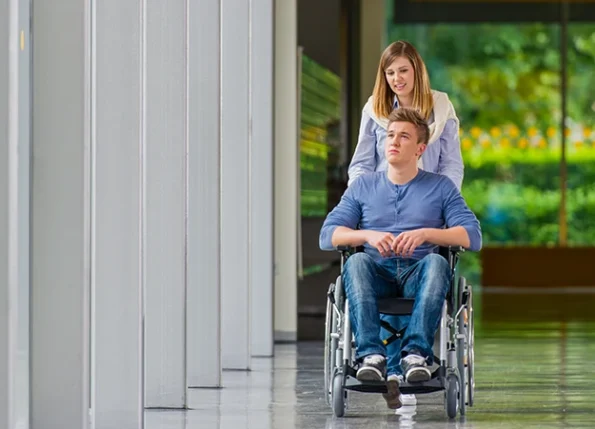
Equipment, home modifications and one-handed living after stroke
The difference between a stroke survivor who manages at home and one who does not is frequently a few hundred dollars of equipment and a bathroom that was modified in time.
That sounds reductive, and it is roughly true. Two people with the same deficit can end up in entirely different places: one living independently with a rail, a perching stool, a shower chair and some adapted cutlery; the other needing two support visits a day because the bathroom requires a step over a hob and nobody organised anything.
The problem is timing. Equipment is assessed against current function, which changes rapidly in the first year. Home modifications take six to twelve months to assess, fund and build, and then last fifteen years. Discharge happens in week four. Those three timescales do not fit together, and the gap between them is where people get stuck.
This guide covers what equipment actually helps after a stroke, how to manage the sequencing, and the practical business of doing everyday things with one working hand.
Our equipment and home modifications guide covers the general discharge process. What follows is stroke-specific.
The sequencing problem, and how to handle it
The principle that resolves it: let cheap, fast, reversible decisions follow current function, and make slow, expensive, irreversible decisions generously.
Cheap and reversible — shower chair, rails, perching stool, adapted cutlery, a walking stick, a bed lever. Buy or request these as needed. Most sit under the NDIS low-cost assistive technology threshold of roughly $1,500, which generally means they can come from consumables or core funding without a formal assessment or quote. Many people do not realise this and wait months for something they could have had in a fortnight.
Slow and expensive — bathroom modifications, ramps, widened doorways, a vehicle conversion, a powered wheelchair. These need to be specified against where the person is likely to be in a year, not where they are in week six. Build the shower level now rather than removing a hob later; widen the doorway properly rather than rehanging the door.
And start the slow ones immediately, even while recovery is ongoing, because the assessment and approval pipeline is the long pole. An occupational therapist can specify a bathroom that works for a person using a wheelchair and also works for a person who later walks in with a stick. The reverse — a bathroom designed for current function in month two — frequently has to be redone.
The thing to ask the occupational therapist explicitly: “Can you specify this against the range of function he might have in a year, rather than what he can do today?”
The bathroom, which matters most
Bathrooms are where falls happen and where independence is won or lost.
A level-access shower — no hob, no step, with a fall-waste drain — is the single highest-value modification. It removes the step that stops wheelchair and walker access and is the thing most likely to be needed later if it is not done now.
A fixed or wall-mounted shower seat, rather than a free-standing chair, where space allows.
Grab rails positioned by an occupational therapist, not by a builder guessing. Placement depends on which side is affected, how the person transfers and their height. A rail in the wrong place is worse than none because it gets used anyway.
A thermostatic mixer to prevent scalding, which matters a great deal where sensation is reduced on the affected side — an insensate hand under a hot tap does not report it.
Lever taps, operable with one hand or a forearm.
A toilet at the right height with rails, and consideration of which side the person transfers from, because that determines where the rail goes and sometimes which way the door should open.
Space to turn, and a door that opens outward or slides, because a person who falls against an inward-opening door cannot be reached.
Elsewhere in the house
Entry access. A ramp needs a 1:14 gradient to be usable, which means a 600mm rise requires around 8.4 metres of ramp plus landings. People consistently underestimate this and build something too steep. A threshold ramp or a platform lift may be more realistic.
Doorways. A manual wheelchair needs around 800mm of clear width; older Australian internal doors are frequently 720mm or less.
Flooring. Thick carpet is hard work in a wheelchair and a trip hazard with foot drop. Remove loose rugs — they cause a substantial share of falls at home.
The bedroom. Space for transfers, a bed at the right height, a bed lever or rail, and consideration of whether a ground-floor room should become the bedroom.
Stairs, which are the hardest problem. A stairlift, a through-floor lift, or relocating living to one level. Worth modelling early, because it can determine whether the house is viable at all — and if you are contemplating moving anyway, moving to a suitable house is often cheaper and better than modifying an unsuitable one. Take an OT to look at a property before you commit.
Lighting, which is underrated. Visual field loss, neglect and reduced balance all make poor lighting dangerous. Sensor lights on the route to the bathroom prevent night falls.
Mobility equipment
An ankle-foot orthosis for foot drop is frequently the highest-value single item after a stroke: cheap relative to its effect, immediately reduces trip risk, and usually improves walking speed. Custom-moulded fits better than off-the-shelf and matters if it is worn all day.
Functional electrical stimulation is the alternative for lifting the foot, suiting some people better than a brace.
A walking stick held in the unaffected hand, or a four-point stick for more support.
A rollator — four wheels, brakes and a seat — where the seat is the point, because it lets someone rest and continue, which extends range considerably.
A wheelchair, which many stroke survivors use for distance and tiring days while walking at home. That is sensible rather than a half-measure. One stroke-specific point: a standard self-propelled wheelchair requires two hands, so a person with hemiplegia needs either a one-arm-drive chair (both wheels driven from one side), a hemi-height chair low enough to propel with one foot, or a powered chair.
A powered wheelchair or scooter where distance or fatigue is the limiting factor. A scooter needs reasonable trunk control and transfer ability, is good outdoors and poor indoors; a powered wheelchair gives better postural support and indoor manoeuvrability.
Pressure care matters for anyone sitting most of the day, particularly with reduced sensation. A pressure cushion is not an upgrade; it prevents an injury that is expensive, painful and slow to heal.
One-handed living
This is the practical section, and it is the one most likely to be useful tomorrow. Occupational therapists are the experts here and much of this is what they teach.
Dressing. Affected arm into the sleeve first, out last. Elastic-waisted trousers, slip-on or elastic-laced shoes, front-fastening bras or a bra fastened at the front and turned around, magnetic or velcro closures. A button hook and a long-handled shoehorn. A dressing stick for reaching.
Eating. A non-slip mat under the plate, a plate guard or high-sided plate to push food against, a rocker knife that cuts with a rolling motion rather than a sawing one, combined fork-knife cutlery, and a cup with a lid or a two-handled mug.
In the kitchen. A spike board holds vegetables for cutting. A jar opener fixed under a cupboard. A kettle tipper. An electric can opener. A non-slip mat under bowls. A one-handed chopping board with corner walls. Pre-cut vegetables are not laziness. A trolley to move things rather than carrying.
Personal care. A long-handled sponge. A suction nail brush. An electric toothbrush. A soap dispenser rather than a bar. Toothpaste with a flip lid. A wall-mounted hairdryer holder.
Around the house. Keys on a key turner for leverage. A doorknob converted to a lever. A phone in a stand. Velcro instead of buttons on anything that matters. A reacher for dropped items — and a plan for what to do when the reacher is the thing that got dropped.
Technology. Voice assistants are genuinely transformative here: lights, heating, timers, calls, lists and reminders without needing a second hand or precise fine motor control. Voice dictation for typing. Smart plugs for lamps and kettles. For a person with hemiplegia and some aphasia or fatigue, a $60 smart speaker frequently does more good than much more expensive equipment.
The principle underneath all of it: set up the environment so the affected side is used where possible, and remove the two-handed requirement where it is not. Those sound contradictory and are not — the arm should be in the task (stabilising the plate, holding the jar) rather than being bypassed entirely, which is how learned non-use develops.
Falls, which undo more recovery than anything else
Worth its own section, because a fall causing a fracture is the commonest way a good rehabilitation trajectory ends.
Stroke survivors fall a great deal, and the reasons stack: weakness, foot drop catching the toes, reduced sensation in the foot, impaired balance, neglect or visual field loss meaning obstacles are not seen, divided attention problems, fatigue late in the day, urgency to reach the toilet, and medication.
The highest-value, cheapest interventions:
Remove loose rugs. They cause a substantial share of home falls and nobody misses them.
Light the route to the bathroom with sensor lights. Night falls on the way to the toilet are a classic pattern, combining urgency, darkness and sleepiness.
Fix the footwear. Firm, enclosed, well-fitting, non-slip. Scuffs, slippers and thongs are a falls risk, and a foot with reduced sensation inside a loose shoe is worse again.
Address continence urgency, because rushing to the toilet is a common fall mechanism. A commode or urinal beside the bed removes the rush entirely.
Deal with foot drop properly — an AFO is a falls intervention as much as a walking one.
Clear the paths, including the route taken at 2am, and check for cords, pet bowls and furniture that has drifted.
Don’t talk to someone while they negotiate steps. Divided attention problems make that genuinely unsafe for some stroke survivors.
Review the medications, since sedatives, blood pressure medications causing postural drops, and anything anticholinergic all contribute.
And if a fall happens: report it even where there is no apparent injury. A pattern of falls is clinical information, and an unreported fall is a missed chance to fix the cause. Anyone on anticoagulants who hits their head needs medical assessment the same day regardless of how they seem.
How the funding works
Low-cost assistive technology, broadly under $1,500 — most of the one-handed living items above — generally comes from consumables or core funding without formal assessment. This is the fast route and it is underused.
Mid-cost items in the band from about $1,500 up to $15,000 call for an assessment by the relevant allied health professional, plus a quote in most cases — rollators, manual wheelchairs, pressure cushions and AFOs sit here.
High-cost items over roughly $15,000 require a comprehensive assessment, usually a trial of the equipment, quotes and sign-off from the NDIA. This is the band for powered chairs, complex seating, converting a vehicle and structural building work.
Three things that improve outcomes:
Trial before committing. A powered chair that does not fit through your bathroom door is an expensive mistake, and the trial is where that gets found.
Write the justification around function and risk. “Mr X has had a stroke” justifies nothing. “Mr X has fallen three times in four months, twice in the bathroom stepping over the hob, and cannot shower without physical assistance; a level-access shower with a wall-mounted seat would allow independent showering and reduce fall risk” justifies a bathroom.
Include repairs and maintenance in the plan, and ask about loan equipment during repairs before you need it. Powered wheelchair batteries need replacing every eighteen months to two years.
While the person is still in hospital, equipment for discharge is generally a health system responsibility rather than an NDIS one, which is a boundary worth knowing because it determines who you ask — see who pays: health vs NDIS.
Renting, and what you can and cannot change
A large number of stroke survivors rent, and the equipment and modification advice above quietly assumes ownership.
What applies in a rental:
Written landlord consent is required for anything fixed, and the NDIS will require evidence of it before funding structural modifications. Start this early, because it is frequently the slowest part of the process.
Some modifications must be reversed at the end of the tenancy, and the cost of reinstatement should be considered up front.
Tenancy law in every state and territory now provides some protection for modifications needed for disability, and landlords cannot unreasonably refuse in most jurisdictions — but the detail varies and a tenancy advice service in your state is the place to check. Do not accept a verbal “no” as the end of the matter.
Non-fixed alternatives exist for almost everything and are worth knowing: free-standing toilet surrounds instead of wall-mounted rails, over-bath shower boards, portable threshold ramps, clamp-on rails, suction rails for non-structural use (with the caveat that these are for balance, not for taking weight), and a free-standing shower chair rather than a wall-mounted seat.
Moving may be the better option, and this is worth raising early with the housing provider if the person is in social housing, where a transfer to a more accessible property is sometimes available and the waiting list starts when you apply.
Equipment, Home Modifications and One-Handed Living After Stroke: common questions
For most people: a shower chair or stool, grab rails positioned by an occupational therapist, a non-slip bath mat, a perching stool for the kitchen, adapted cutlery with a rocker knife and plate guard, and an ankle-foot orthosis if there is foot drop. Most of these fall under the NDIS low-cost assistive technology threshold of roughly $1,500, which generally means they can come from consumables or core funding without a formal assessment or quote.
Immediately, even while recovery is continuing, because assessment, quotes, approval and construction routinely take six to twelve months. Ask the occupational therapist to specify it against the range of function the person might have in a year rather than what they can do today — a level-access shower built now rather than a hob removed later. A bathroom designed for current function in month two frequently has to be redone.
Not a standard self-propelled one, which needs two hands. The options are a one-arm-drive chair where both wheels are driven from one side, a hemi-height chair low enough to propel with one foot, or a powered chair. This is a common oversight — people are supplied a standard chair they cannot actually move themselves.
A brace holding the ankle at ninety degrees, used for foot drop where weakness prevents lifting the toes during the swing phase of walking. It is frequently the highest-value single item after a stroke — cheap relative to its effect, it immediately reduces trip risk and usually improves walking speed. Custom-moulded costs more and fits better, which matters if it is worn all day.
Affected arm into the sleeve first and out last, which is the single most useful rule. Then: elastic-waisted trousers, slip-on or elastic-laced shoes, magnetic or velcro closures, a front-fastening bra or one fastened at the front and turned around, a button hook and a long-handled shoehorn. An occupational therapist will teach the technique, which matters more than the equipment.
A non-slip mat under the plate, a plate guard or high-sided plate to push food against, and a rocker knife that cuts with a rolling motion rather than sawing — that last one changes meals more than anything else on the list. Also combined fork-knife cutlery and a cup with a lid or two handles.
Often disproportionately so. Voice assistants control lights, heating, timers, calls, lists and reminders without needing a second hand or fine motor precision, and voice dictation handles typing. For someone with hemiplegia plus fatigue or mild aphasia, a $60 smart speaker frequently does more practical good than much more expensive equipment.
Ask the question explicitly, because sometimes the answer is move. A two-storey house with a narrow entry, an upstairs bathroom and no ground-floor toilet may be modifiable in principle and a poor use of money in practice. An occupational therapist can assess a house against current and projected need, and if you are buying, taking an OT to view a property before committing is an hour very well spent.
Equipment needed for discharge is generally a health system responsibility rather than an NDIS one, which matters because it determines who you ask and avoids a wait for NDIS approval that would delay discharge. Once the person is home and has a plan, ongoing equipment moves to the NDIS. The boundary causes a lot of confusion and it is worth clarifying with the hospital social worker before discharge.
No. Low-cost items under roughly $1,500 generally need no formal assessment or quote. Between roughly $1,500 and $15,000 you will need an assessment from the relevant allied health professional plus a quote. Over roughly $15,000 the process involves a comprehensive assessment, a trial in most cases, quotes and NDIA sign-off. Always trial expensive equipment first: discovering a powered chair cannot get through your bathroom door after it arrives is an avoidable and costly mistake.




